A solid gold Buddha that hid under plaster for centuries, the neon signs of Yaowarat Road, a busy Chinese Buddhist temple and the narrow market lane of Sampheng.
Best time: Late afternoon into the evening, when the street food stalls open on Yaowarat Road.
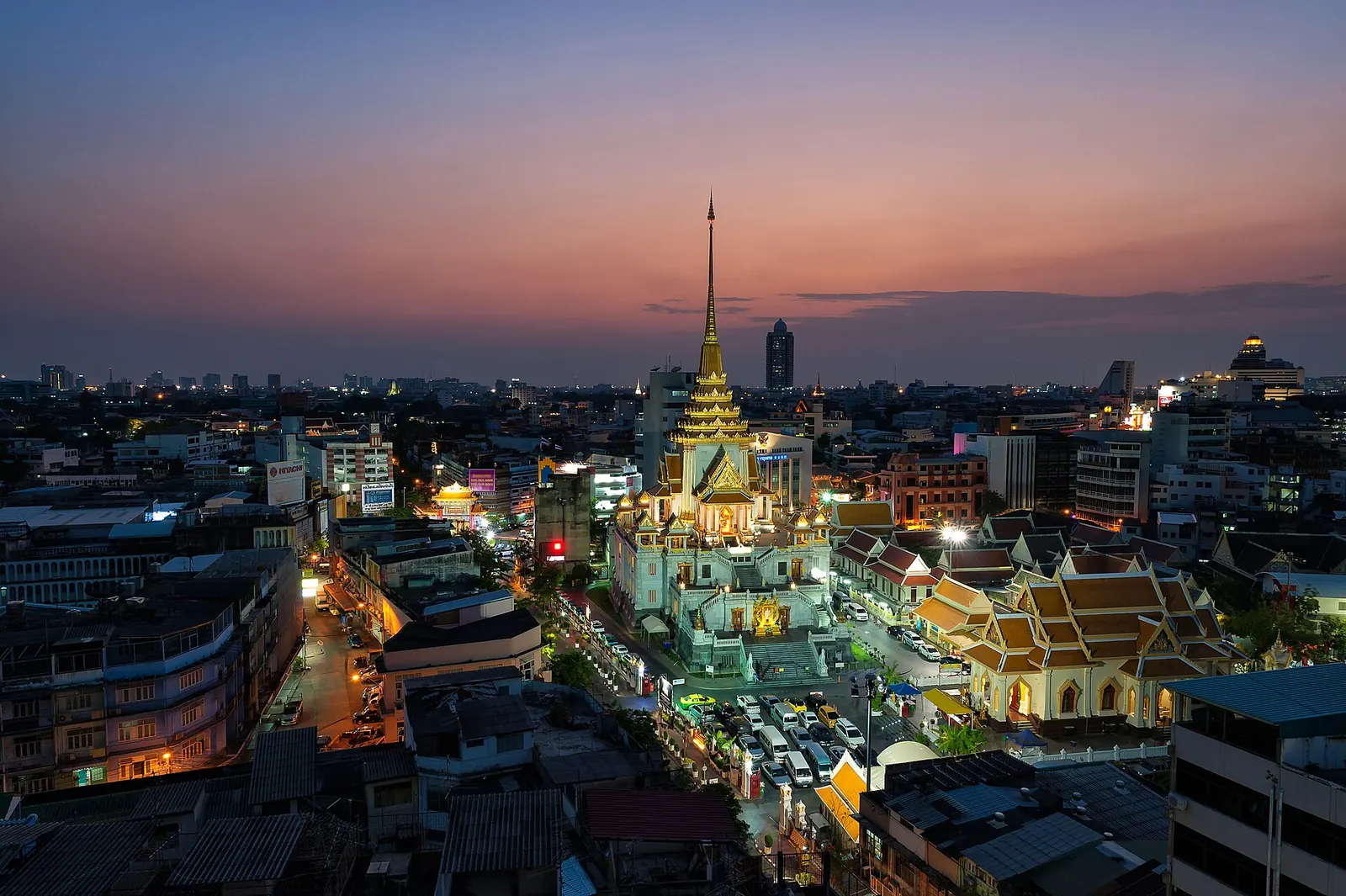
Wat Traimit is a Buddhist temple at the edge of Bangkok's Chinatown. Its name means "three friends". People say it was started by three Chinese friends, and it was once called Wat Sam Chin, "the temple of the three Chinese". It probably dates from the reign of King Rama III, but most of it was rebuilt in the 1930s and 1940s.
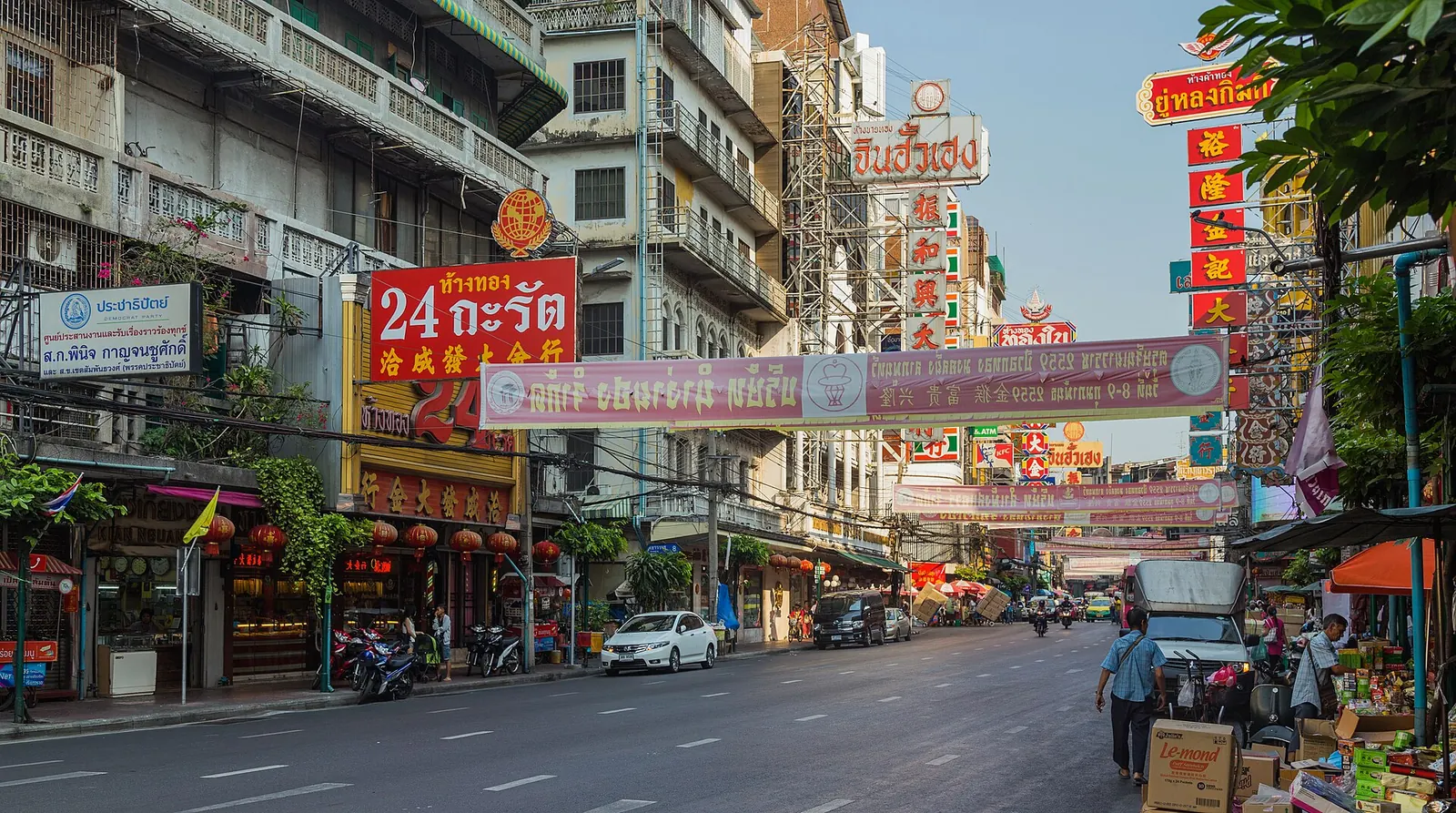
Yaowarat Road is the main street of Bangkok's Chinatown. It is about 1.5 kilometres long, and it curves. People say its shape looks like the body of a dragon, which makes it a lucky place for business.
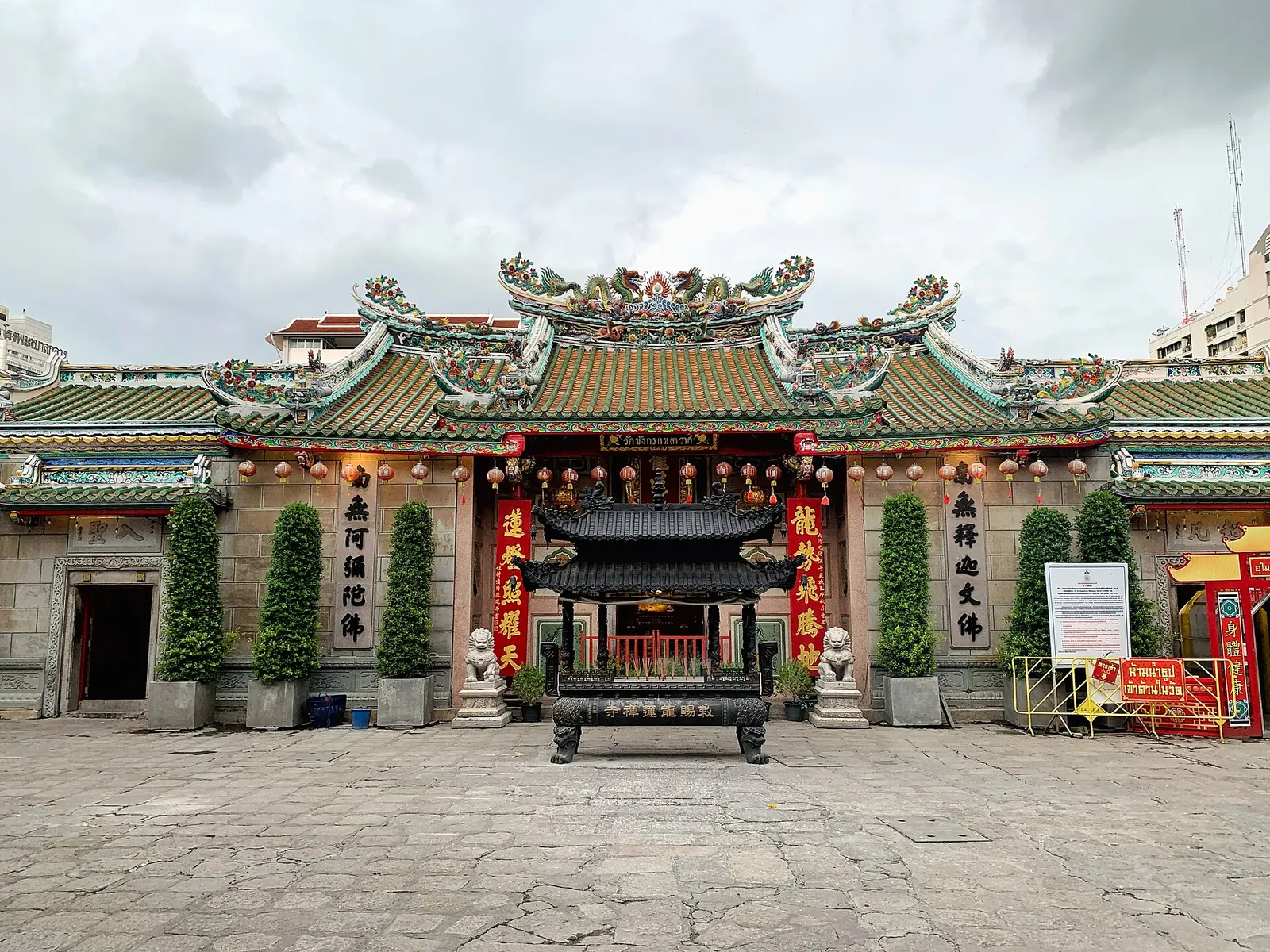
Wat Mangkon Kamalawat is the largest and most important Chinese Buddhist temple in Bangkok. It was founded in 1871 or 1872 by a monk known as Sok Heng. At first it was called Wat Leng Noei Yi. Later, King Chulalongkorn (Rama V) gave it the name it has today, which means "Dragon Lotus Temple".
Sampheng is one of the oldest parts of Bangkok's Chinatown, and a famous market. Its main street is now officially called Soi Wanit 1. It is a narrow lane, packed with shops on both sides.