

Draft, not reviewed
Al-Rifa'i Mosque
مسجد الرفاعي
Time here: 15 min in a hurry, 30 min relaxed
Al-Rifa'i Mosque.
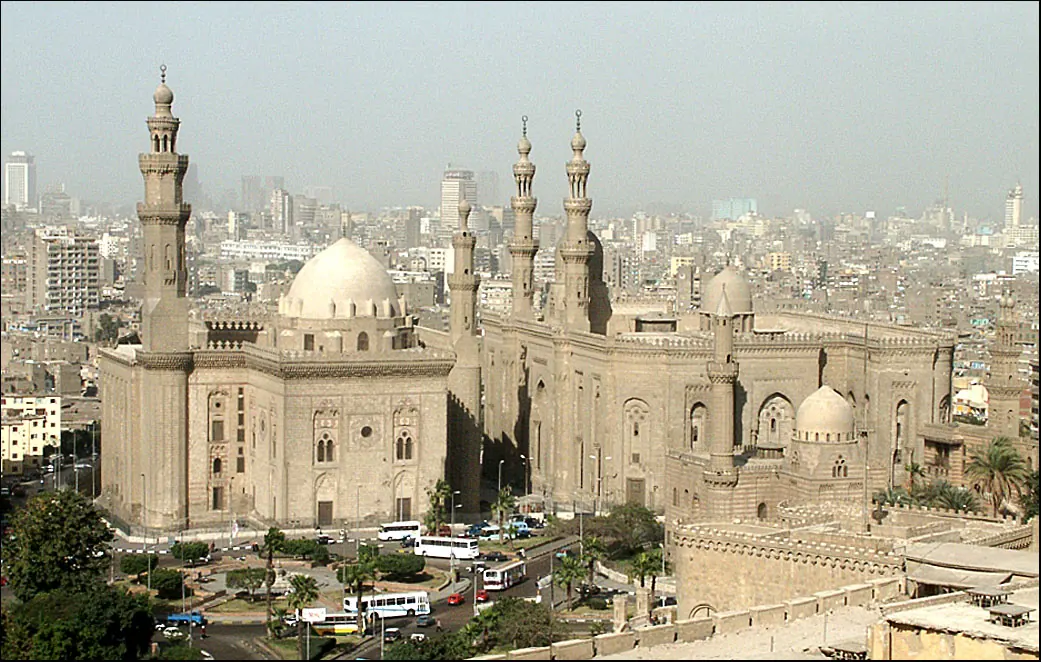
Here you stand between two giants. On one side is the Mosque-Madrasa of Sultan Hassan, built between 1356 and 1363. On the other is the Al-Rifa'i Mosque. It looks just as old, but it is much younger: it was finished in 1912.
The rulers of Egypt in the nineteenth century wanted to link themselves with the glory of the past. So this mosque was built in a Neo-Mamluk style, which copies old Mamluk buildings. The builders tried to match the Sultan Hassan mosque in size and height. Even the two minarets stand on round bases, like those of Sultan Hassan.
Before, a small mosque from the twelfth century stood here. Later, Ali Abu Shubbak, the grandson of Ahmad al-Rifa'i, was buried in it. The new mosque takes its name from this family.
In 1869, Hoshiyar Qadin, the mother of Khedive Isma'il, ordered the new building. Work stopped in 1880, and she died in 1885. Work began again only in 1905, and the Hungarian architect Max Herz saw it finished.
Today the mosque is also a royal tomb. Many members of Egypt's royal family are buried here, including King Fuad I and King Farouk. Look for the tomb of King Fuad, covered with coloured marble.
For many Muslims, the tomb of Ali Abu Shubbak is an important place of pilgrimage.