

Draft, not reviewed
Coptic Museum
المتحف القبطي
Time here: 45 min in a hurry, 2 h relaxed
Coptic Museum.
This museum tells the story of Egypt's Coptic Christians through their art. It holds the largest collection of Coptic objects in the world.
The museum began with one man, Marcus Simaika. In 1908, with help from Pope Cyril V, he started to build it. The Coptic Orthodox Church gave the land, and the public gave money. The museum opened on 14 March 1910. Coptic families gave many gifts, such as church clothes, wall paintings and icons.
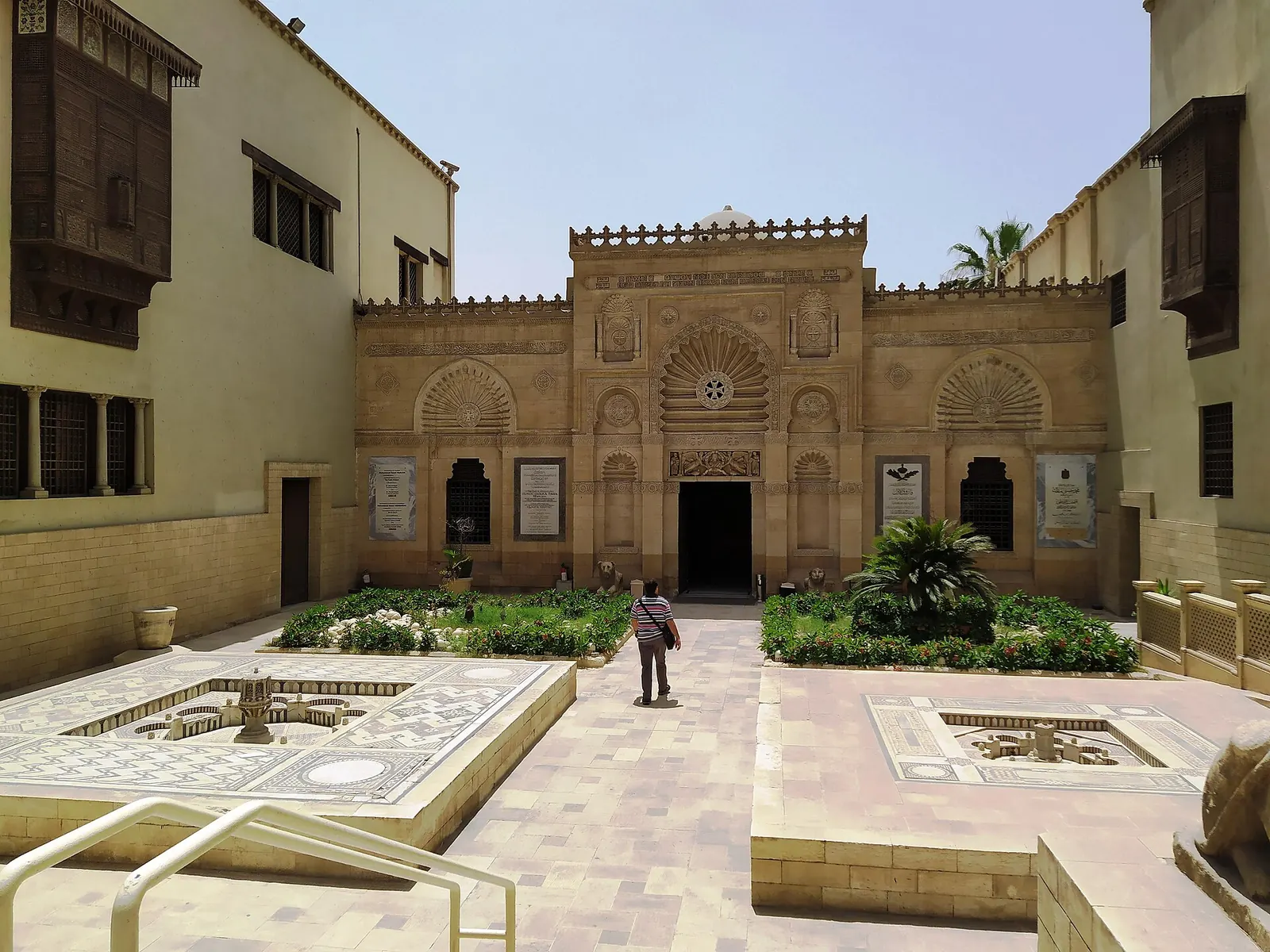
Before you go in, look at the front of the building. It was made to look like the front of the Aqmar Mosque, from the twelfth century. Inside, the floors have mosaics, and there are old mashrabiya screens.
The collection is large: about 16,000 objects, shown in order of time. You can see work in stone, wood, metal and cloth, and old books written by hand. The art shows how Coptic artists mixed ideas from Pharaonic Egypt, from Greece and Rome, and from the Islamic world. This Christian period links the time of the pharaohs with the Islamic period, but people often forget it.
The museum also keeps the famous Nag Hammadi library: twelve ancient books bound in leather, and pages from a thirteenth. In 1945, an Egyptian farmer and others found them buried in a sealed jar in Upper Egypt. They are kept in a library for specialist researchers.
Around the museum are gardens, courtyards and old Coptic churches. Two of them are the Hanging Church and the church of Saints Sergius and Bacchus.