

Draft, not reviewed
Mosque of Ibn Tulun
مسجد ابن طولون
Time here: 25 min in a hurry, 50 min relaxed
Mosque of Ibn Tulun.
This is the oldest well-preserved mosque in Egypt. Ahmad ibn Tulun built it between 876 and 879. He was the Abbasid governor of Egypt, but in practice he ruled on his own. The design of the mosque came from the mosques of Samarra in Iraq, the Abbasid capital at that time.
Ibn Tulun built a whole new capital here, called al-Qata'i, and this was its main mosque. His palace stood right behind it. He could walk from the palace into the mosque through a private door. You can still see that doorway, to the right of the mihrab (the niche that shows the direction of prayer).
In 905, an Abbasid army came to take back Egypt. It destroyed al-Qata'i completely. Only the mosque and the palace were left standing. Today the mosque is the only building left from that city.
The mosque stands on a small hill. A local legend says that Noah's Ark came to rest here after the great flood.
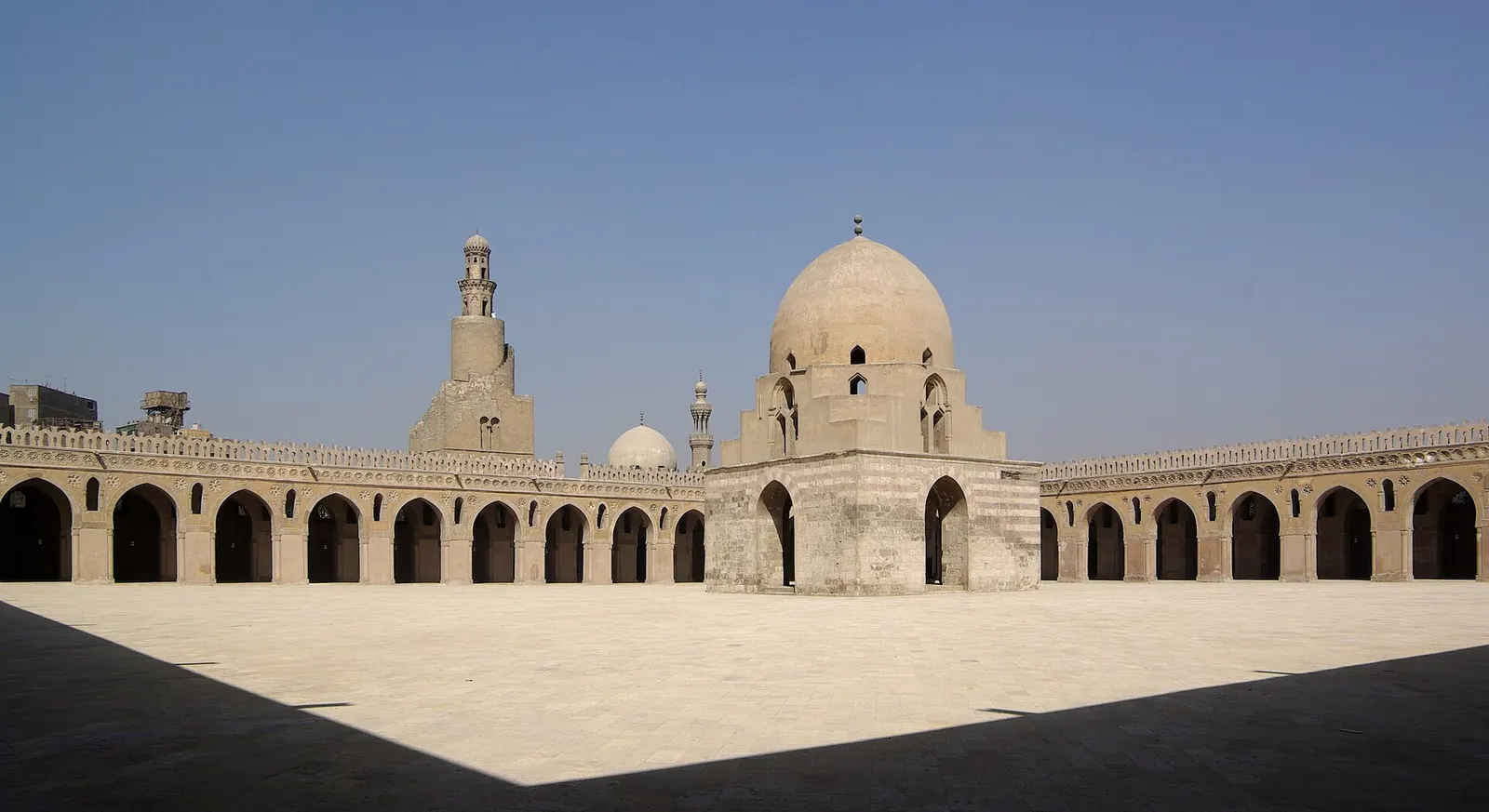
Walk into the huge open courtyard. Around it are rows of pointed arches, decorated with carved stucco, a kind of plaster. In the middle is a fountain under a dome. It comes from a restoration by the Mamluk sultan Lajin in 1296.
Now find the minaret, in the outer enclosure. Its staircase turns around the outside of the tower. This is a very unusual form.