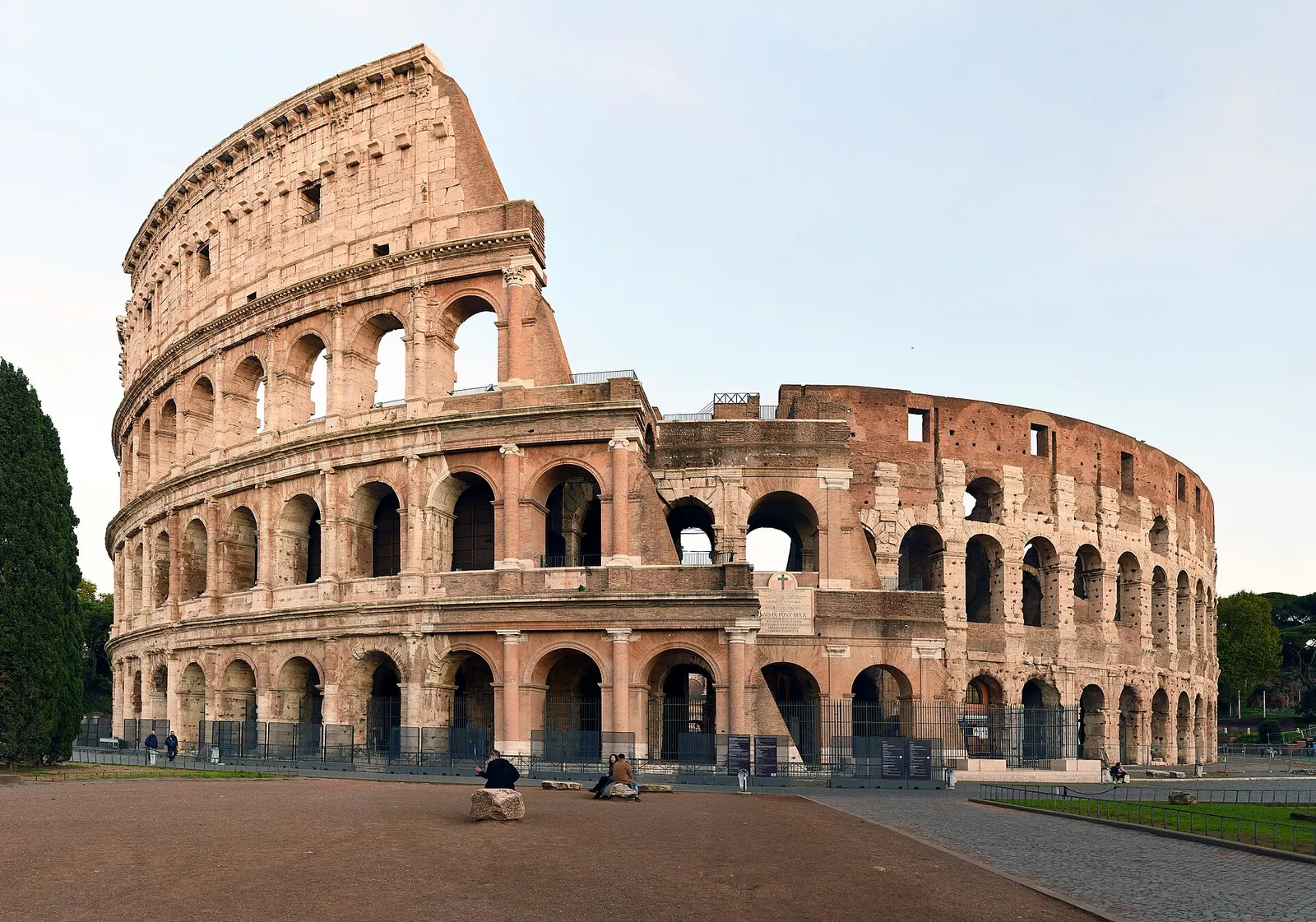


Colosseum.
The Colosseum is the largest amphitheatre ever built in ancient times, and the largest one still standing anywhere in the world.
Emperor Vespasian began it in the year 72, and his son Titus finished it in 80 AD. Another emperor, Domitian, made more changes. These three emperors were from the Flavian family, so the building is also called the Flavian Amphitheatre.
It was built of travertine stone, Roman concrete and tuff, a volcanic rock. Between 50,000 and 80,000 people could watch the shows. Inside, Romans watched gladiators fight, animal hunts, executions, battles acted out, plays about Roman myths, and for a short time even battles with ships on water.
The shows ended in the early Middle Ages. After that, people used the building for homes, workshops, a fortress, a quarry for stone, and a Christian shrine. Earthquakes and people taking its stones damaged much of it.
Still, it is a symbol of ancient Rome, and one of the New 7 Wonders of the World. Every Good Friday, the pope leads a torchlit procession, the Way of the Cross, near the Colosseum. Look in your pocket, too: the building is on the Italian 5 cent coin.