
Jogyesa.
In the middle of busy downtown Seoul, you hear the sound of chanting. Jogyesa is the chief temple of the Jogye Order, the largest group of Korean Buddhists.
The modern temple was founded in 1910, the year Korea came under Japanese rule. It was first called Gakhwangsa. During the colonial years, the Japanese tried to control Korean Buddhism, and this temple became a centre of resistance. Its name changed to Taegosa in 1938, and then to Jogyesa in 1954.
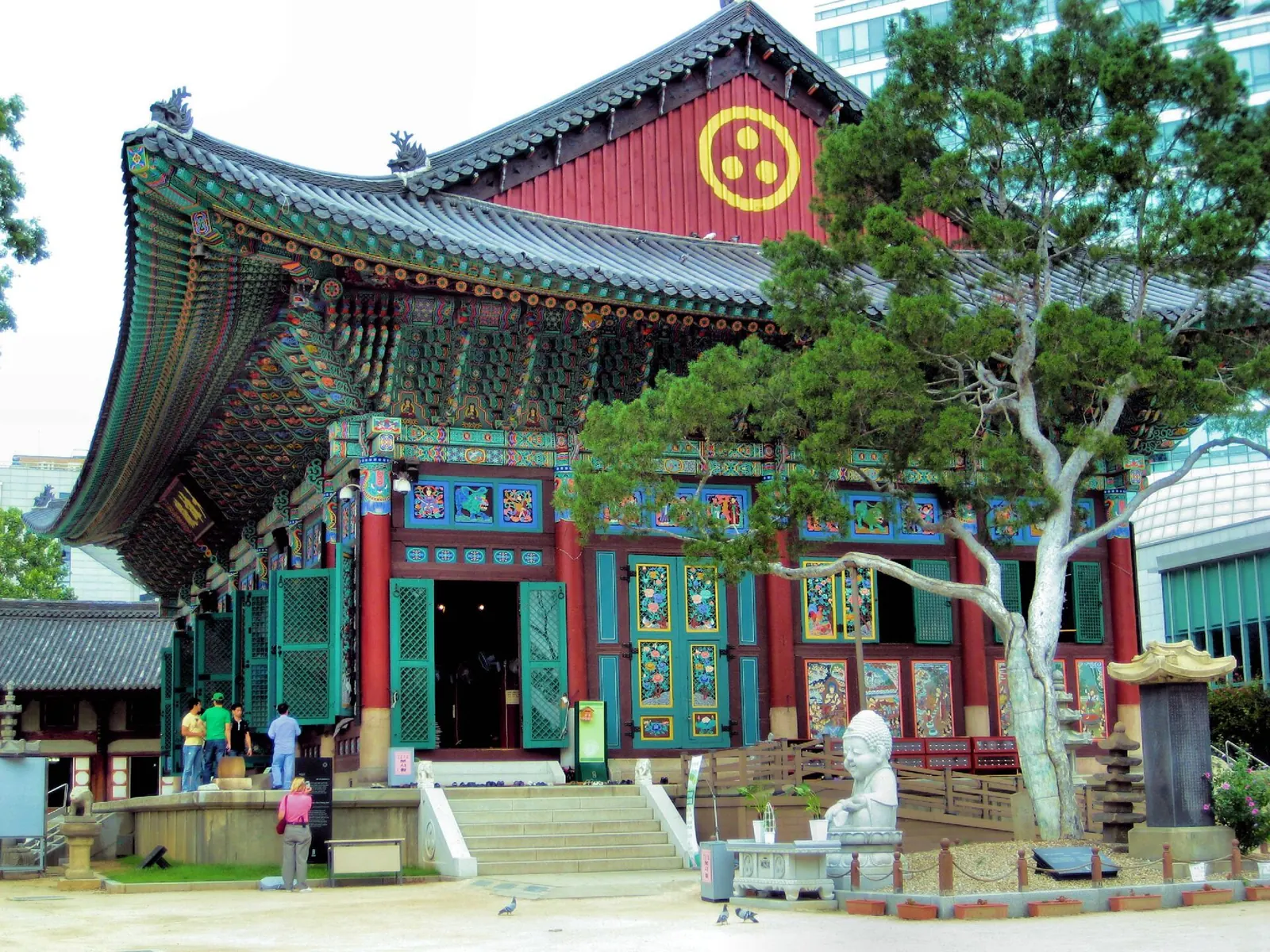
The main hall, the Daeungjeon, was built in 1938 of pine wood from Baekdu Mountain. Look closely at the doors and windows: their wooden lattice patterns are very special.
In the courtyard stand two trees about 500 years old. One is a white pine, about 10 metres high. It was brought by Chinese missionaries in the Joseon period. It is a rare tree and protected as a natural monument. The other is a Chinese scholar tree, 26 metres tall, which stands over the temple grounds.
You enter through the Iljumun, the "one pillar gate". It marks the line between the everyday world and the world of the Buddha.
For Buddha's Birthday in spring, the temple is filled with colourful lanterns. The temple also runs a Templestay programme, where visitors can live like Buddhist monks for a short time.