
Kensington · Stop 2 of 5
Natural History Museum
When you are there
- Look closely at the walls: terracotta tiles carved with plants and animals
- Living animals are on the west side, extinct ones on the east. Spot the mistakes!
- Step into the great central hall: a blue whale skeleton hangs from the ceiling
Natural History Museum.
The Natural History Museum holds about 80 million plants, animals, rocks and fossils. Some were collected by Charles Darwin. It is also a centre of scientific research.
The collection began with Sir Hans Sloane, a doctor from Ulster. The government bought his collection, paid for with a lottery, and put it in the British Museum in 1756. But the natural history rooms there were badly looked after. By 1833, not one of Sloane's 5,500 insects was left. One keeper even burned specimens in the museum grounds.
Things changed when the scientist Richard Owen took charge in 1856. He wanted a museum for everyone, and he needed more space. So a new building was planned here in South Kensington.
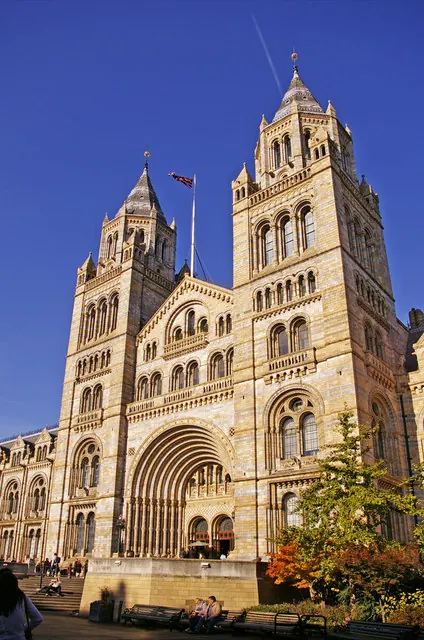
The first architect, Francis Fowke, died in 1865. Alfred Waterhouse took over and designed the building you see. It opened on 18 April 1881. Look closely at the walls. They are covered in terracotta tiles, chosen because they would not be harmed by the sooty air of Victorian London. The tiles have carvings of plants and animals. Living species are on the west side and extinct ones on the east, as Owen asked. But Waterhouse slipped in a few mistakes, like bats among the extinct animals.
Step into the great central hall, sometimes called a "cathedral of nature". For many years a Diplodocus dinosaur skeleton stood here. Since 2017, the skeleton of a blue whale has hung from the ceiling instead. Don't miss the dinosaur galleries.
Quick facts
- About 80 million specimens
- 1881Opened on 18 April
- A blue whale skeleton hangs in the main hall
- Entry is free
Visit tips
Entry is free, but it is very busy at weekends and in school holidays, so come early. Check opening hours before you go.