

Draft, not reviewed
Campo de' Fiori
Campo de' Fiori
Time here: 10 min in a hurry, 25 min relaxed
Campo de' Fiori.
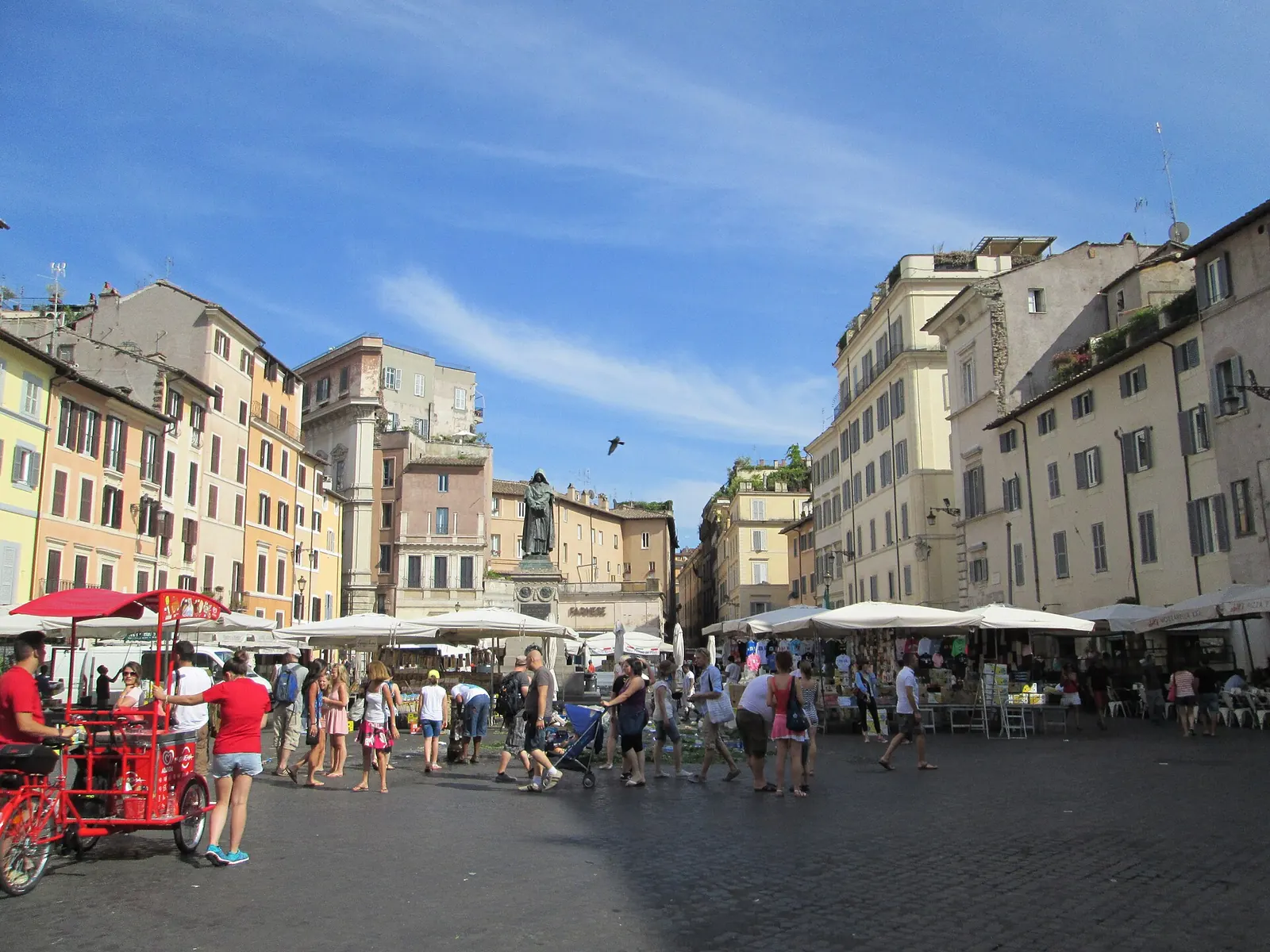
Campo de' Fiori means "Field of Flowers". The name comes from the Middle Ages, when this place was still a meadow. In ancient Rome, it was empty land between Pompey's Theatre and the River Tiber.
In 1456, the square was paved, and grand buildings began to rise around it. It became part of the "Pope's road", which joined the Basilica of St John Lateran and the Vatican. With the new road came money: a horse market twice a week, and many inns and shops.
Look at the names of the streets around you. They are named after old trades: crossbow-makers, hat-makers, key-makers and tailors.
The square also has a dark past. Public executions took place here. On 17 February 1600, the philosopher Giordano Bruno was burned alive here for heresy. In 1889, a statue of him was put up on the exact spot where he died. He stands looking towards the Vatican.
Since 1869, a daily market for vegetables and fish has been held here. It moved here from Piazza Navona.