

Draft, not reviewed
Piazza Navona
Piazza Navona
Time here: 15 min in a hurry, 30 min relaxed
Piazza Navona.
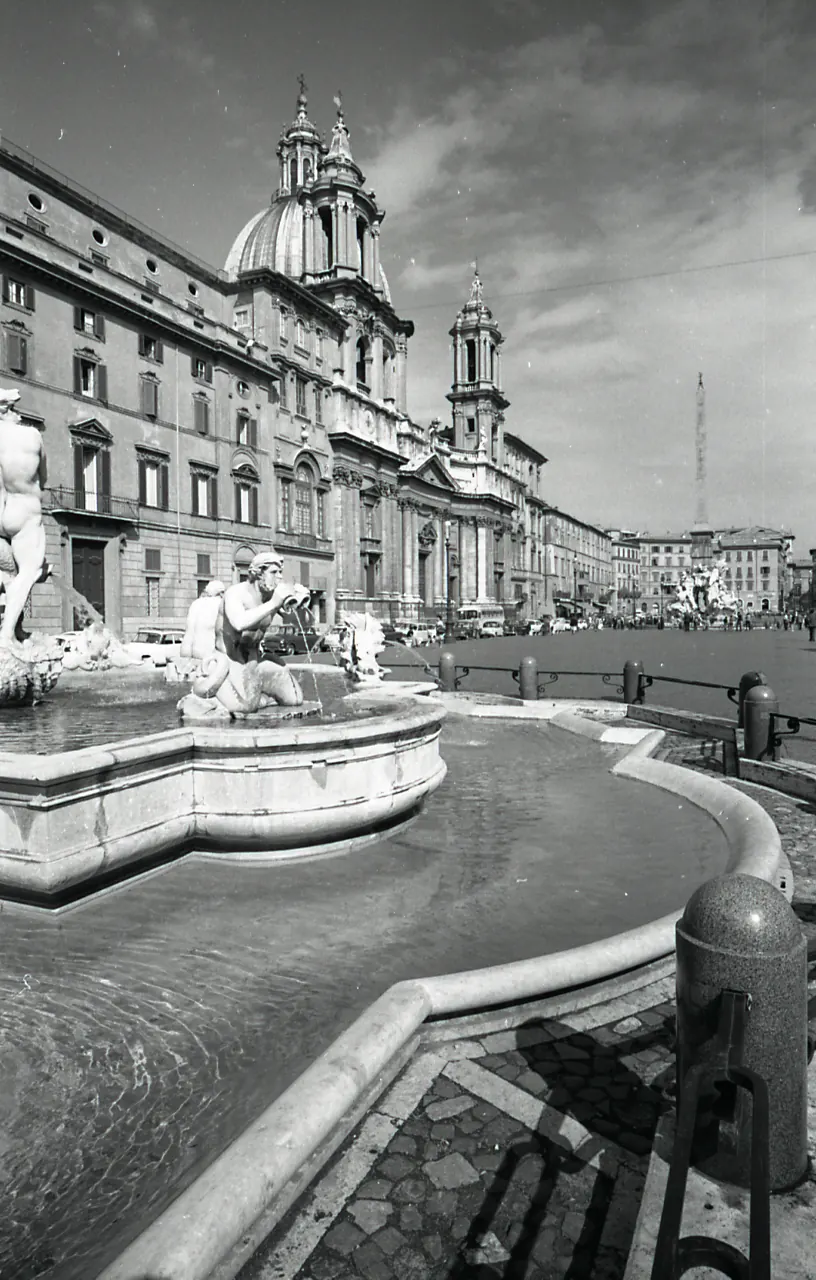
Piazza Navona has a long oval shape, and there is a reason for it. The square sits on top of the Stadium of Domitian, an ancient Roman stadium built by Emperor Domitian in the 80s AD. The Romans came here to watch games. After the Roman Empire fell, the stadium was used as a quarry for building stone, and only a few remains are left.
At the end of the 15th century, the city market moved here, and the square became a public space. In the 17th century, under Pope Innocent X, it was turned into a showcase of Baroque art. His family palace, the Palazzo Pamphili, faced the square.
In the middle stands the most famous work: the Fountain of the Four Rivers, made by Gian Lorenzo Bernini in 1651. On top is the Obelisk of Domitian, brought here in pieces from the Circus of Maxentius. Behind it is the church of Sant'Agnese in Agone, worked on by Francesco Borromini and others.
There are two more fountains. At the south end is the Fontana del Moro; Bernini designed its statue of a Moor wrestling with a dolphin in 1653, and it was put in place the next year. At the north end is the Fountain of Neptune, whose statue of Neptune was only added in 1878.