Singapore's oldest Hindu temple, a great Buddhist temple, and the Hokkien temple where sailors gave thanks for a safe crossing. End with lunch under the iron roof of an old market.
Best time: Morning, when the temples are quiet. Dress modestly and take off your shoes where asked.
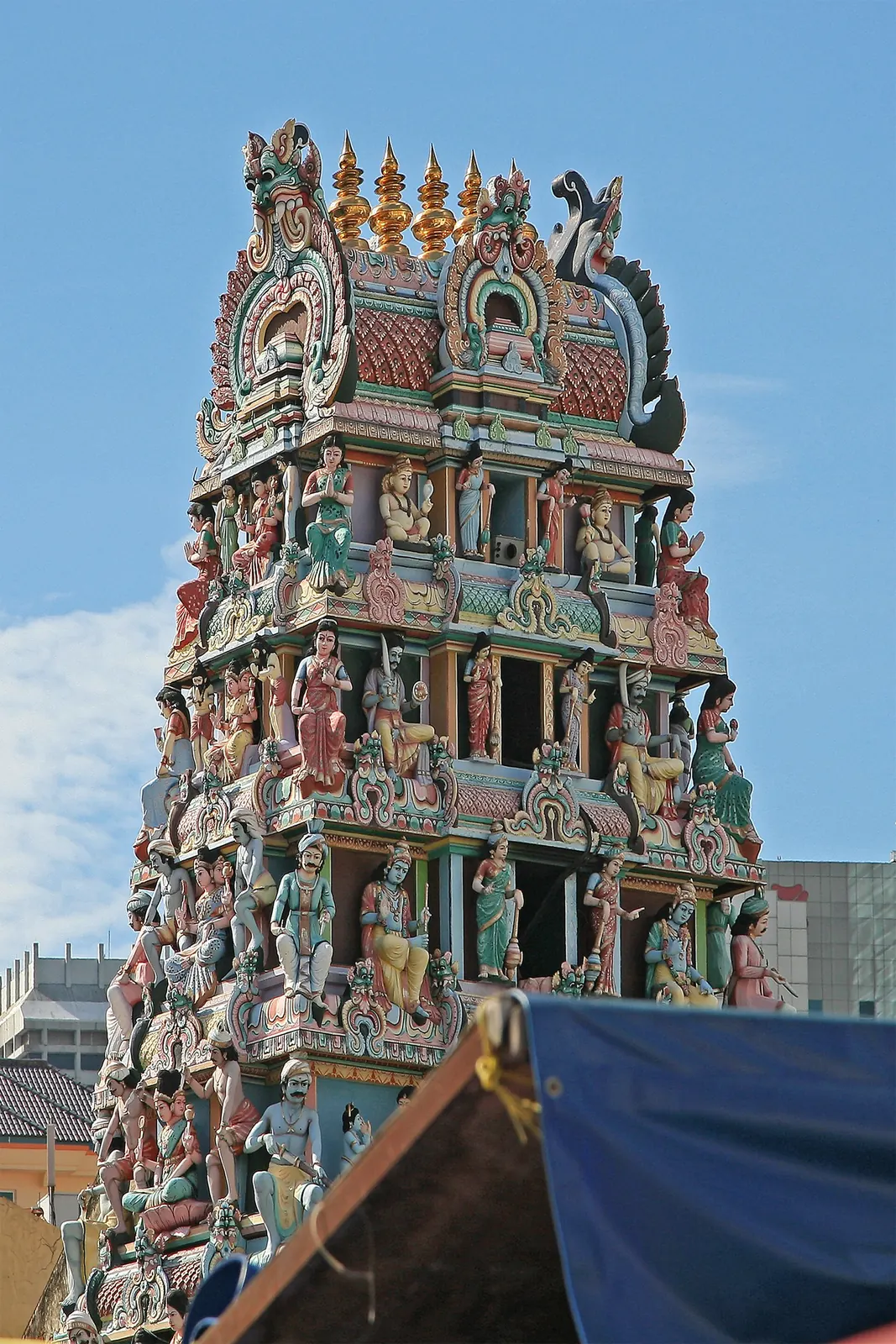
This is Singapore's oldest Hindu temple. It was founded in 1827 by Naraina Pillai, a government clerk from Penang who came to Singapore with Stamford Raffles in 1819. Pillai started the island's first building company, traded in cloth, and soon became a leader of the Indian community.
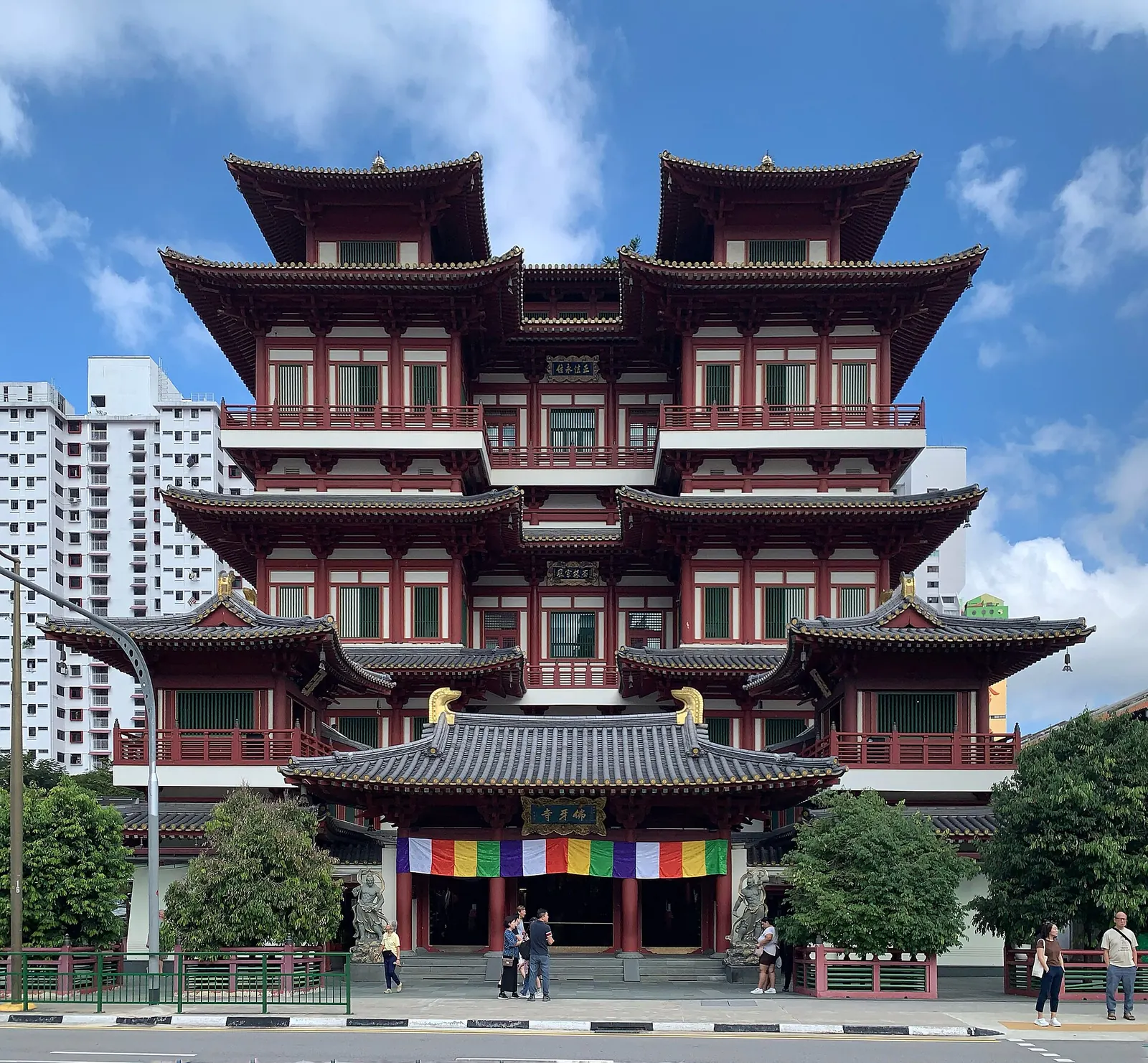
This large red temple looks old, but it is one of the newest buildings in Chinatown. It was built to hold a tooth that is said to belong to the Buddha. The story says it was found in a collapsed stupa, a Buddhist shrine. The tooth is 7.5 centimetres long, which is far too long for a human tooth. You can see it on the fourth floor.
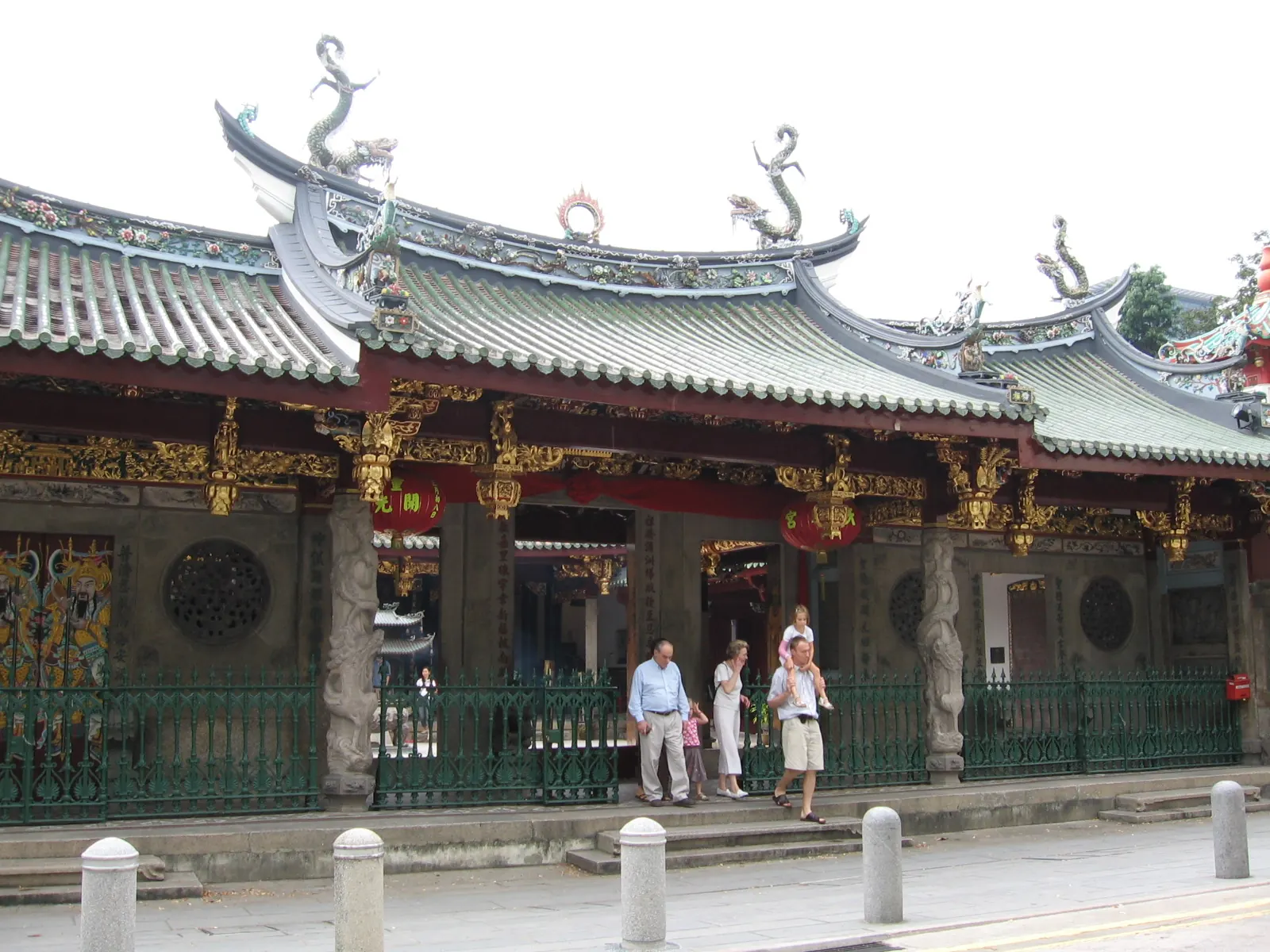
Imagine this street on the seashore. Telok Ayer Street was once the coast road, and this temple faced the sea. Chinese sailors and migrants landed here after a long, dangerous journey and came to give thanks to Mazu, the Chinese goddess of the sea, for a safe crossing.
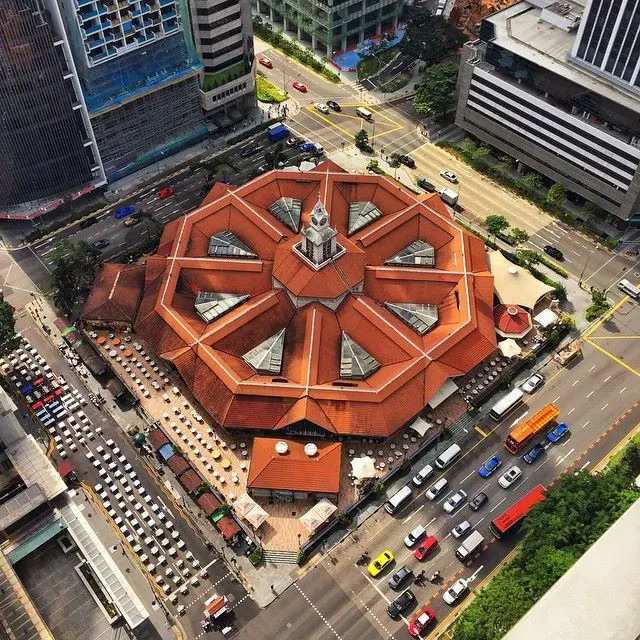
Lau Pa Sat means "old market" in Hokkien, a Chinese language. "Pa sat" comes from the word bazaar. Its official name is Telok Ayer Market, after the bay that was once here.