
Chinatown Temples · Stop 4 of 4
Lau Pa Sat
When you are there
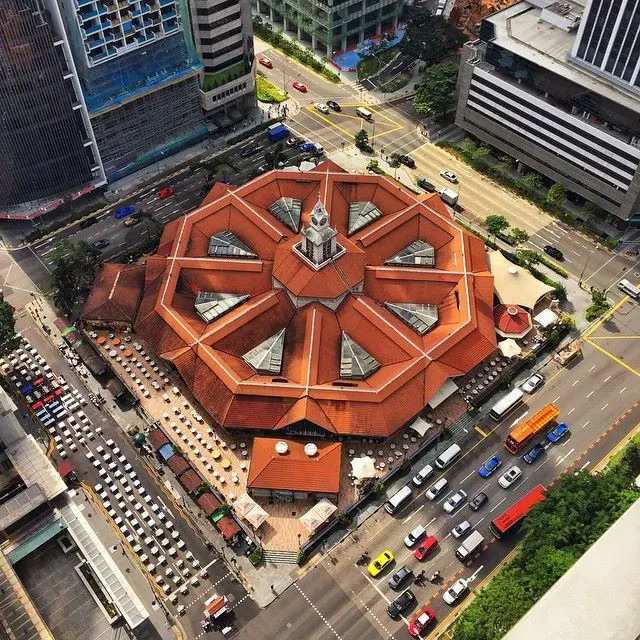
- Look at the eight-sided building and its cast-iron pillars, made in Glasgow
- Inside: a hawker centre, a place with many small food stalls
Lau Pa Sat.
Lau Pa Sat means "old market" in Hokkien, a Chinese language. "Pa sat" comes from the word bazaar. Its official name is Telok Ayer Market, after the bay that was once here.
The first market on this bay opened in 1824. It was a simple wooden building, partly standing on posts in the sea, so that the tides could wash away the waste and boats could unload at its jetties. It was badly built and soon needed repairs. In 1838 a new market was built in the shape of an octagon, with eight sides.
When land was taken from the sea, the market moved to this new land. The building you see now was finished in 1894. Its designer, James MacRitchie, kept the eight-sided shape and used cast-iron pillars. The ironwork was made in Glasgow, Scotland, and shipped across the world. That is why people also called it the "iron market". It is one of the oldest Victorian buildings in Southeast Asia.
In 1972, when offices and banks filled the area, it became a hawker centre: a place with many small food stalls. In the 1980s the whole building was taken apart to build a train line underneath, and then put back together.
Today it is a good place to end a walk with lunch or dinner among the office workers.
Quick facts
- The name means "old market" in Hokkien
- 1894The present iron building dates
- Its cast iron came from Glasgow
- 1973A national monument
Visit tips
A busy food centre; it is most crowded at office lunchtime. Check opening hours before you go.