

From the Forest Shrine to Shibuya · Stop 1 of 4
Meiji Shrine
明治神宮
When you are there
- Cross the Jingu Bashi bridge into the forest
- Look at the trees: 120,000 of them, of 365 kinds, sent from all over Japan
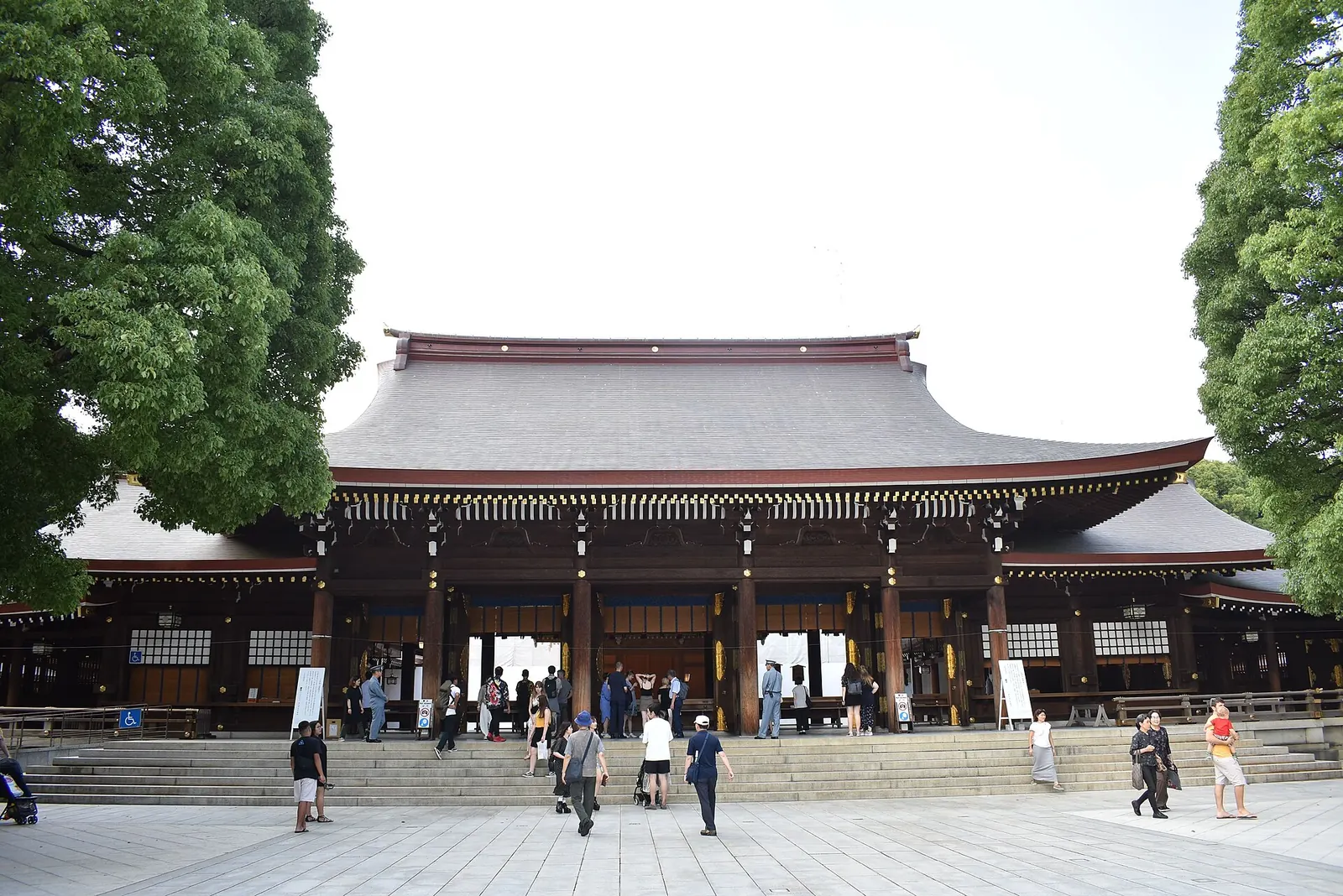
- See the shrine, built of Japanese cypress and copper in a traditional style
Meiji Shrine.
Step off the busy street, cross the Jingu Bashi bridge, and you are suddenly in a forest. It is hard to believe you are in the middle of Tokyo.
Meiji Shrine is a Shinto shrine for the spirits of Emperor Meiji and his wife, Empress Shōken. Emperor Meiji died in 1912. Japan's parliament decided to honour him, and an iris garden that the emperor and empress used to visit was chosen as the place. Note that the emperor is not buried here. His grave is near Kyoto.
Building the shrine was a national project. Youth groups and other groups from all over Japan gave their work and their money. The main wood came from Kiso in Nagano and from Alishan in Taiwan. The shrine was built from Japanese cypress and copper in a traditional style, and dedicated in 1920.
The forest around it was also a gift. It has 120,000 trees of 365 different kinds, sent by people from every part of Japan. Today it covers 70 hectares.
The first shrine buildings were destroyed in the air raids of the Second World War. The shrine you see now was paid for by public donations and finished in 1958. In January, sumo grand champions, called yokozuna, perform a special ring-entering ceremony here.
Quick facts
- Dedicated to Emperor Meiji and Empress Shōken
- 1920First dedicated in November
- Its forest has 120,000 trees of 365 kinds
- 1958Rebuilt after wartime destruction
Visit tips
The gates open at sunrise and close at sunset. A working shrine: be quiet and respectful, and do not take photos of ceremonies without permission.