

From the Forest Shrine to Shibuya · Stop 2 of 4
Takeshita Street, Harajuku
竹下通り
When you are there
- Walk the narrow lane of small shops and crêpe stands
- Explore the backstreets, Ura-Harajuku, with small independent shops
Takeshita Street, Harajuku.
Takeshita Street is a narrow lane full of small shops, crêpe stands and young shoppers. It is in Harajuku, a district known around the world as a centre of Japanese youth culture and fashion.
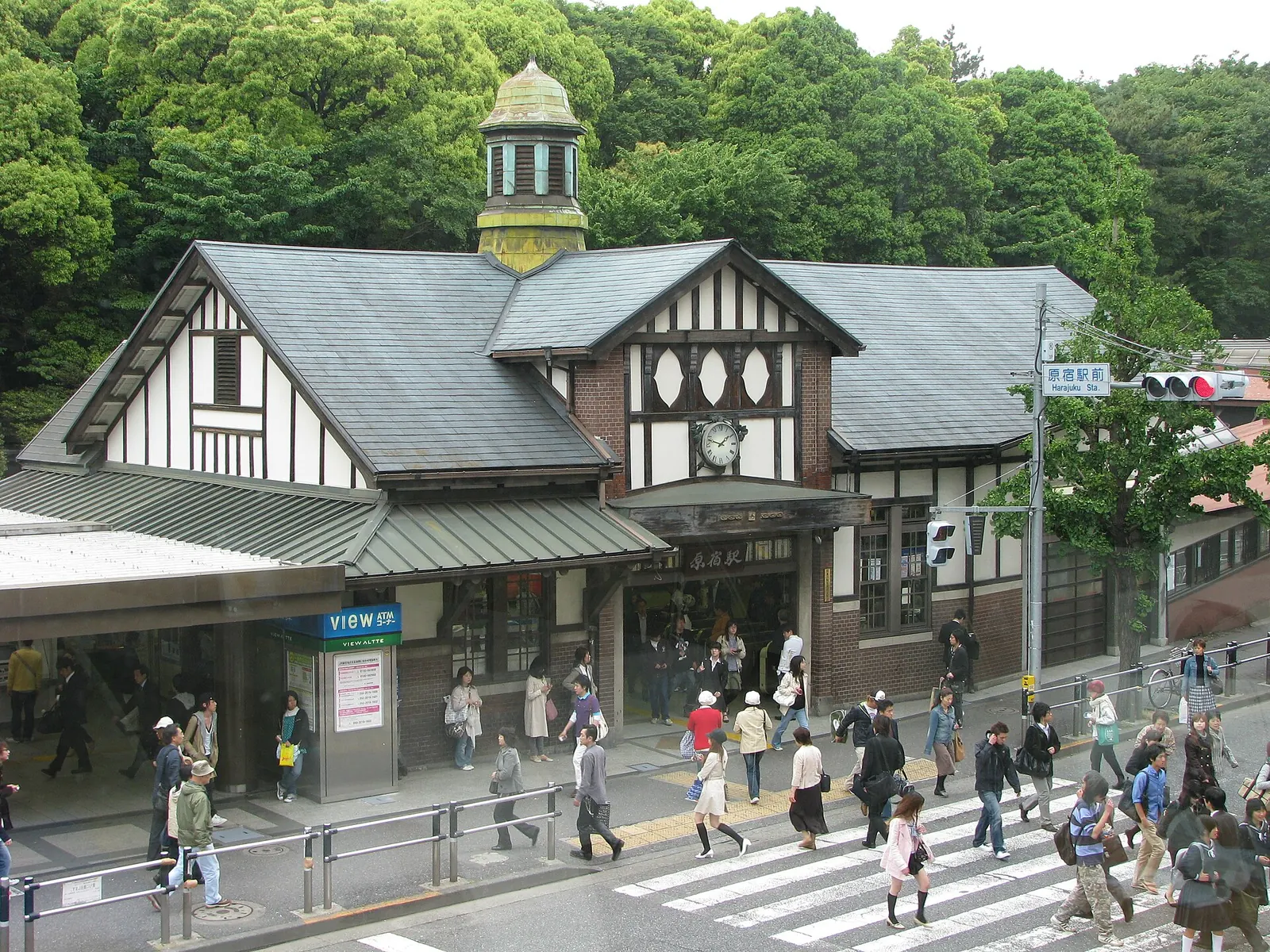
Harajuku was not always fashionable. Long ago it was a small post town, a stop for travellers on the road to Kamakura. Its farmers were poor, because the land was bad. In 1906 Harajuku Station opened, and in 1919 the big avenue to the new Meiji Shrine was laid out. In 1945, much of the area burned in the air raids on Tokyo.
After the war, American soldiers and their families lived in housing where Yoyogi Park is now, and shops opened for them. In the 1970s, fashion-loving young people moved here from Shinjuku. The fashion building Laforet Harajuku opened in 1978, and Harajuku became famous for clothes.
In the 1980s, Takeshita Street was known for groups of teenagers who danced in the street, called takenoko-zoku. On Sundays, some roads were closed to cars, and crowds of up to 10,000 people came to watch bands playing in the open air. Later, small independent shops spread into the back streets, which are now called Ura-Harajuku, the "Harajuku backstreets".
Today big international stores sit next to tiny boutiques, and the street is still full of colour.
Quick facts
- Harajuku is a world centre of Japanese youth fashion
- 1906Harajuku Station opened
- 1978Laforet Harajuku opened
- 1980Famous for street dancers in the s
Visit tips
Very crowded, especially at weekends and in the afternoon; keep your bag close. Come on a weekday morning for a calmer walk.